 Add to Chrome
 Add to Firefox
 Add to Edge
PhyWorld: Physics-Faithful World Model for Video Generation
May 19, 2026
World simulators can provide safe and scalable environments for training Physical AI systems before real-world deployment. Large video generation models are emerging as a promising basis for such simulators because they can generate diverse and realistic visual futures. However, using them as world simulators requires physically faithful video continuations, namely, generated videos that preserve the physical state implied by the conditioning input, and evolve in ways consistent with basic physical principles. We propose PhyWorld, a video generation world model designed to produce temporally coherent and physically faithful scene continuations through two-stage post-training. In the first stage, we improve video-to-video continuation with flow matching fine-tuning, encouraging stable visual attributes and coherent motion dynamics across frames. In the second stage, we align generated dynamics with physical principles using Direct Preference Optimization (DPO) over physics preference pairs, guiding the model toward outputs with higher physical plausibility. To evaluate PhyWorld, we use both standard video-quality benchmarks and a dedicated physical-faithfulness benchmark with per-law scoring. Experiments show that PhyWorld improves video consistency, achieving an average score of 0.769 on VBench compared with 0.756 or below for state-of-the-art baselines. PhyWorld also improves physical plausibility, reaching an average score of 3.09 on our physical-faithfulness benchmark compared with 2.99 for the strongest baseline. These results suggest that post-training large video generation models with continuation and physics-preference signals can make them more effective world simulators for Physical AI.

PhyGround: Benchmarking Physical Reasoning in Generative World Models
May 11, 2026Generative world models are increasingly used for video generation, where learned simulators are expected to capture the physical rules that govern real-world dynamics. However, evaluating whether generated videos actually follow these rules remains challenging. Existing physics-focused video benchmarks have made important progress, but they still face three key challenges, including the coarse evaluation frameworks that hide law-specific failures, response biases and fatigue that undermine the validity of annotation judgments, and automated evaluators that are insufficiently physics-aware or difficult to audit. To address those challenges, we introduce PhyGround, a criteria-grounded benchmark for evaluating physical reasoning in video generation. The benchmark contains 250 curated prompts, each augmented with an expected physical outcome, and a taxonomy of 13 physical laws across solid-body mechanics, fluid dynamics, and optics. Each law is operationalized through observable sub-questions to enable per-law diagnostics. We evaluate eight modern video generation models through a large-scale, quality-controlled human study, grounded on social science lab experiment design. A total of 459 annotators provided 5,796 complete annotations and over 37.4K fine-grained labels; after quality control, the retained annotations exhibited high split-half model-ranking correlations (Spearman's rho > 0.90). To support reproducible automated evaluation, we release PhyJudge-9B, an open physics-specialized VLM judge. PhyJudge-9B achieves substantially lower aggregate relative bias than Gemini-3.1-Pro (3.3% vs. 16.6%). We release prompts, human annotations, model checkpoints, and evaluation code on the project page https://phyground.github.io/.
DUET: Joint Exploration of User Item Profiles in Recommendation System
Apr 15, 2026Traditional recommendation systems represent users and items as dense vectors and learn to align them in a shared latent space for relevance estimation. Recent LLM-based recommenders instead leverage natural-language representations that are easier to interpret and integrate with downstream reasoning modules. This paper studies how to construct effective textual profiles for users and items, and how to align them for recommendation. A central difficulty is that the best profile format is not known a priori: manually designed templates can be brittle and misaligned with task objectives. Moreover, generating user and item profiles independently may produce descriptions that are individually plausible yet semantically inconsistent for a specific user--item pair. We propose Duet, an interaction-aware profile generator that jointly produces user and item profiles conditioned on both user history and item evidence. Duet follows a three-stage procedure: it first turns raw histories and metadata into compact cues, then expands these cues into paired profile prompts and then generate profiles, and finally optimizes the generation policy with reinforcement learning using downstream recommendation performance as feedback. Experiments on three real-world datasets show that Duet consistently outperforms strong baselines, demonstrating the benefits of template-free profile exploration and joint user-item textual alignment.
Beyond State Consistency: Behavior Consistency in Text-Based World Models
Apr 15, 2026World models have been emerging as critical components for assessing the consequences of actions generated by interactive agents in online planning and offline evaluation. In text-based environments, world models are typically evaluated and trained with single-step metrics such as Exact Match, aiming to improve the similarity between predicted and real-world states, but such metrics have been shown to be insufficient for capturing actual agent behavior. To address this issue, we introduce a new behavior-aligned training paradigm aimed at improving the functional consistency between the world model and the real environment. This paradigm focuses on optimizing a tractable step-level metric named Behavior Consistency Reward (BehR), which measures how much the likelihood of a logged next action changes between the real state and the world-model-predicted state under a frozen Reference Agent. Experiments on WebShop and TextWorld show that BehR-based training improves long-term alignment in several settings, with the clearest gains in WebShop and less movement in near-ceiling regimes, while preserving or improving single-step prediction quality in three of four settings. World models trained with BehR also achieve lower false positives in offline surrogate evaluation and show modest but encouraging gains in inference-time lookahead planning.
When Should a Robot Think? Resource-Aware Reasoning via Reinforcement Learning for Embodied Robotic Decision-Making
Mar 17, 2026Embodied robotic systems increasingly rely on large language model (LLM)-based agents to support high-level reasoning, planning, and decision-making during interactions with the environment. However, invoking LLM reasoning introduces substantial computational latency and resource overhead, which can interrupt action execution and reduce system reliability. Excessive reasoning may delay actions, while insufficient reasoning often leads to incorrect decisions and task failures. This raises a fundamental question for embodied agents: when should the agent reason, and when should it act? In this work, we propose RARRL (Resource-Aware Reasoning via Reinforcement Learning), a hierarchical framework for resource-aware orchestration of embodied agents. Rather than learning low-level control policies, RARRL learns a high-level orchestration policy that operates at the agent's decision-making layer. This policy enables the agent to adaptively determine whether to invoke reasoning, which reasoning role to employ, and how much computational budget to allocate based on current observations, execution history, and remaining resources. Extensive experiments, including evaluations with empirical latency profiles derived from the ALFRED benchmark, show that RARRL consistently improves task success rates while reducing execution latency and enhancing robustness compared with fixed or heuristic reasoning strategies. These results demonstrate that adaptive reasoning control is essential for building reliable and efficient embodied robotic agents.
Effective MoE-based LLM Compression by Exploiting Heterogeneous Inter-Group Experts Routing Frequency and Information Density
Feb 11, 2026Mixture-of-Experts (MoE) based Large Language Models (LLMs) have achieved superior performance, yet the massive memory overhead caused by storing multiple expert networks severely hinders their practical deployment. Singular Value Decomposition (SVD)-based compression has emerged as a promising post-training technique; however, most existing methods apply uniform rank allocation or rely solely on static weight properties. This overlooks the substantial heterogeneity in expert utilization observed in MoE models, where frequent routing patterns and intrinsic information density vary significantly across experts. In this work, we propose RFID-MoE, an effective framework for MoE compression by exploiting heterogeneous Routing Frequency and Information Density. We first introduce a fused metric that combines expert activation frequency with effective rank to measure expert importance, adaptively allocating higher ranks to critical expert groups under a fixed budget. Moreover, instead of discarding compression residuals, we reconstruct them via a parameter-efficient sparse projection mechanism to recover lost information with minimal parameter overhead. Extensive experiments on representative MoE LLMs (e.g., Qwen3, DeepSeekMoE) across multiple compression ratios demonstrate that RFID-MoE consistently outperforms state-of-the-art methods like MoBE and D2-MoE. Notably, RFID-MoE achieves a perplexity of 16.92 on PTB with the Qwen3-30B model at a 60% compression ratio, reducing perplexity by over 8.0 compared to baselines, and improves zero-shot accuracy on HellaSwag by approximately 8%.
Open-Source Multimodal Moxin Models with Moxin-VLM and Moxin-VLA
Dec 22, 2025Recently, Large Language Models (LLMs) have undergone a significant transformation, marked by a rapid rise in both their popularity and capabilities. Leading this evolution are proprietary LLMs like GPT-4 and GPT-o1, which have captured widespread attention in the AI community due to their remarkable performance and versatility. Simultaneously, open-source LLMs, such as LLaMA and Mistral, have made great contributions to the ever-increasing popularity of LLMs due to the ease to customize and deploy the models across diverse applications. Moxin 7B is introduced as a fully open-source LLM developed in accordance with the Model Openness Framework, which moves beyond the simple sharing of model weights to embrace complete transparency in training, datasets, and implementation detail, thus fostering a more inclusive and collaborative research environment that can sustain a healthy open-source ecosystem. To further equip Moxin with various capabilities in different tasks, we develop three variants based on Moxin, including Moxin-VLM, Moxin-VLA, and Moxin-Chinese, which target the vision-language, vision-language-action, and Chinese capabilities, respectively. Experiments show that our models achieve superior performance in various evaluations. We adopt open-source framework and open data for the training. We release our models, along with the available data and code to derive these models.
TSLA: A Task-Specific Learning Adaptation for Semantic Segmentation on Autonomous Vehicles Platform
Aug 17, 2025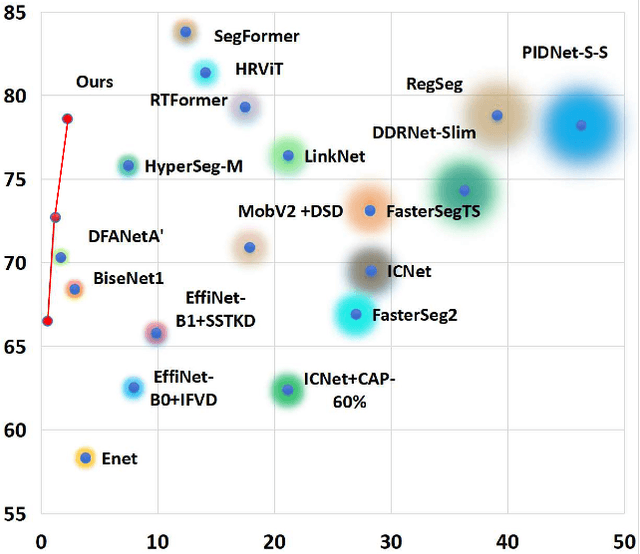
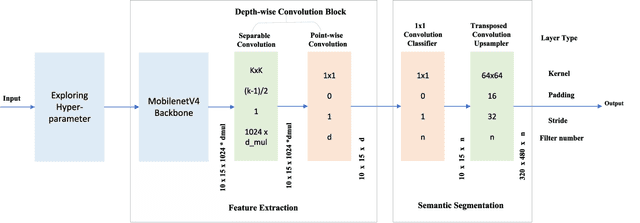
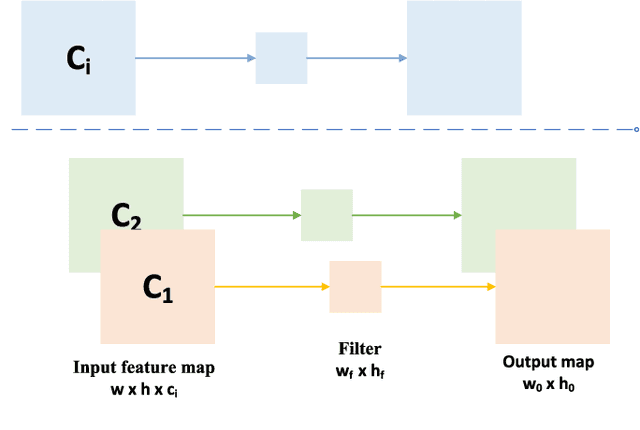
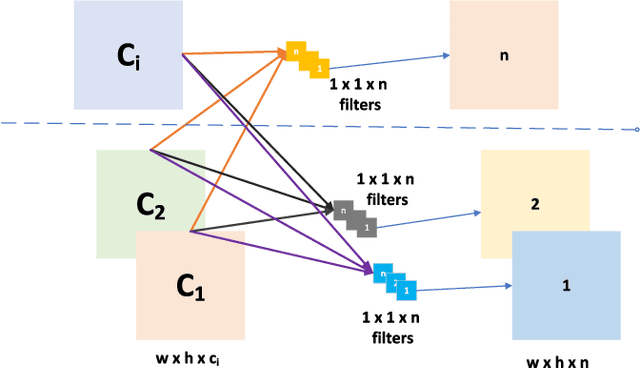
Autonomous driving platforms encounter diverse driving scenarios, each with varying hardware resources and precision requirements. Given the computational limitations of embedded devices, it is crucial to consider computing costs when deploying on target platforms like the NVIDIA\textsuperscript{\textregistered} DRIVE PX 2. Our objective is to customize the semantic segmentation network according to the computing power and specific scenarios of autonomous driving hardware. We implement dynamic adaptability through a three-tier control mechanism -- width multiplier, classifier depth, and classifier kernel -- allowing fine-grained control over model components based on hardware constraints and task requirements. This adaptability facilitates broad model scaling, targeted refinement of the final layers, and scenario-specific optimization of kernel sizes, leading to improved resource allocation and performance. Additionally, we leverage Bayesian Optimization with surrogate modeling to efficiently explore hyperparameter spaces under tight computational budgets. Our approach addresses scenario-specific and task-specific requirements through automatic parameter search, accommodating the unique computational complexity and accuracy needs of autonomous driving. It scales its Multiply-Accumulate Operations (MACs) for Task-Specific Learning Adaptation (TSLA), resulting in alternative configurations tailored to diverse self-driving tasks. These TSLA customizations maximize computational capacity and model accuracy, optimizing hardware utilization.
AdaptFlow: Adaptive Workflow Optimization via Meta-Learning
Aug 11, 2025Recent advances in large language models (LLMs) have sparked growing interest in agentic workflows, which are structured sequences of LLM invocations intended to solve complex tasks. However, existing approaches often rely on static templates or manually designed workflows, which limit adaptability to diverse tasks and hinder scalability. We propose AdaptFlow, a natural language-based meta-learning framework inspired by model-agnostic meta-learning (MAML). AdaptFlow learns a generalizable workflow initialization that enables rapid subtask-level adaptation. It employs a bi-level optimization scheme: the inner loop refines the workflow for a specific subtask using LLM-generated feedback, while the outer loop updates the shared initialization to perform well across tasks. This setup allows AdaptFlow to generalize effectively to unseen tasks by adapting the initialized workflow through language-guided modifications. Evaluated across question answering, code generation, and mathematical reasoning benchmarks, AdaptFlow consistently outperforms both manually crafted and automatically searched baselines, achieving state-of-the-art results with strong generalization across tasks and models. The source code and data are available at https://github.com/microsoft/DKI_LLM/tree/AdaptFlow/AdaptFlow.
RCR-Router: Efficient Role-Aware Context Routing for Multi-Agent LLM Systems with Structured Memory
Aug 06, 2025Multi-agent large language model (LLM) systems have shown strong potential in complex reasoning and collaborative decision-making tasks. However, most existing coordination schemes rely on static or full-context routing strategies, which lead to excessive token consumption, redundant memory exposure, and limited adaptability across interaction rounds. We introduce RCR-Router, a modular and role-aware context routing framework designed to enable efficient, adaptive collaboration in multi-agent LLMs. To our knowledge, this is the first routing approach that dynamically selects semantically relevant memory subsets for each agent based on its role and task stage, while adhering to a strict token budget. A lightweight scoring policy guides memory selection, and agent outputs are iteratively integrated into a shared memory store to facilitate progressive context refinement. To better evaluate model behavior, we further propose an Answer Quality Score metric that captures LLM-generated explanations beyond standard QA accuracy. Experiments on three multi-hop QA benchmarks -- HotPotQA, MuSiQue, and 2WikiMultihop -- demonstrate that RCR-Router reduces token usage (up to 30%) while improving or maintaining answer quality. These results highlight the importance of structured memory routing and output-aware evaluation in advancing scalable multi-agent LLM systems.